The Monastery hike: climbing to Ad Deir
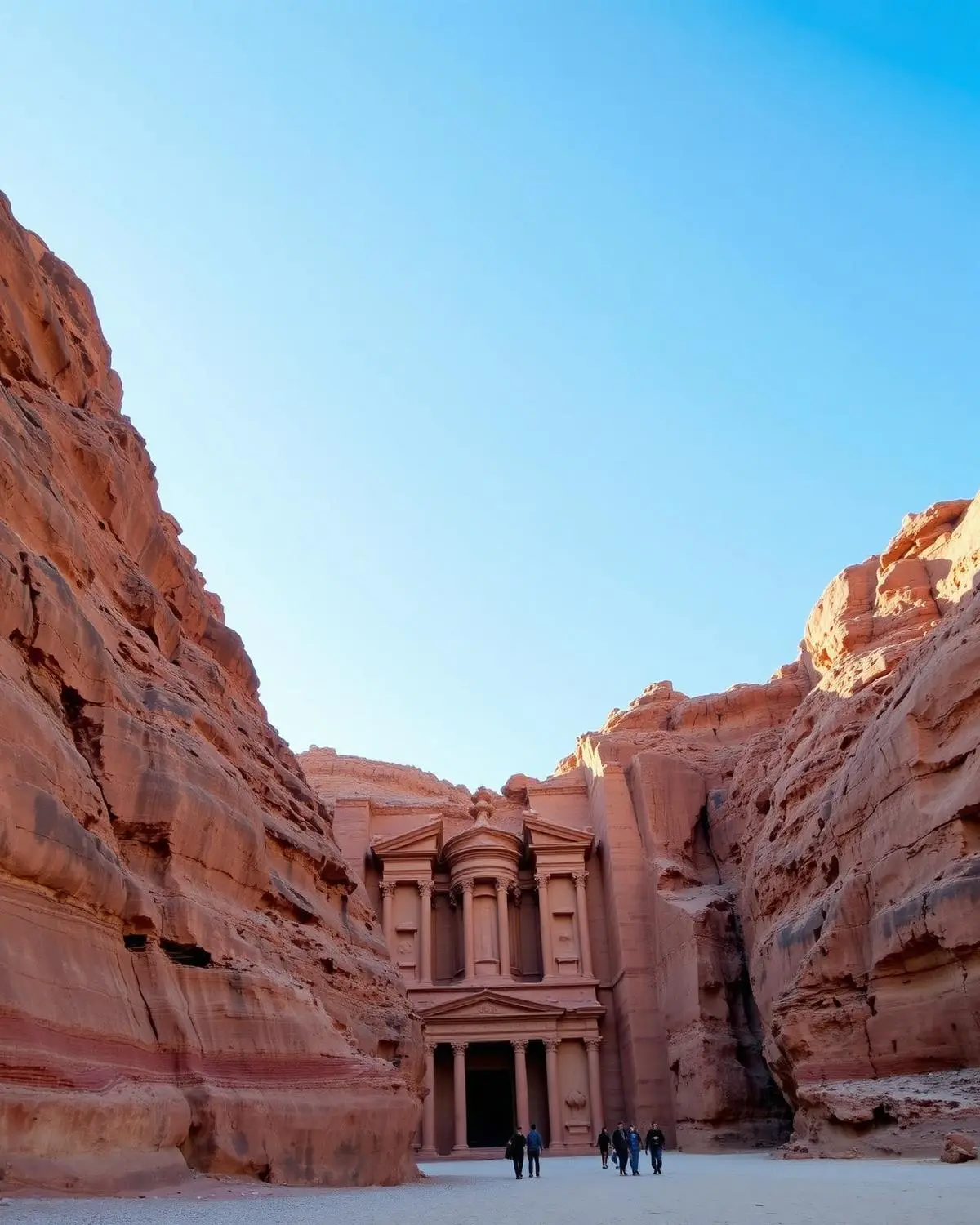
Ad Deir, the Monastery, is bigger than the Treasury and far quieter, because reaching it takes effort. It sits at the top of a long rock-cut stair above the far end of the valley. This is the climb most visitors talk about afterwards — both the view and the steps.
The hike at a glance
| Distance | 13 km return from the gate |
|---|---|
| Climb | ≈800 rock-cut steps |
| Total time | 6–7 hours |
| Difficulty | Strenuous |
| Stops | The Siq · Treasury · Colonnaded Street · Lion Triclinium · Ad Deir · Viewpoint 'End of the World' |
The route
The full valley walk, then the long staircase up Wadi Kharrubat to the Monastery and the viewpoints beyond it at the end of the world.
The first part is the ordinary Main Trail: down the Siq, past the Treasury and along the Colonnaded Street. The stair begins beyond it, and the Lion Triclinium is the landmark that tells you you are on the right path. After that, the steps simply keep going, with a few flatter stretches, until the Monastery appears at the top.
Beyond Ad Deir, a short walk leads to the viewpoint known as the End of the World. It is worth the extra minutes if you have the legs and the light.
When to climb
The stair faces the afternoon sun and has little shade. Two good strategies:
- Early: enter at 06:00, walk straight through the valley and climb before the heat builds. You will have the top almost to yourself.
- Late: climb in the later afternoon, when the facade turns amber. In winter, the site closes at 16:00 and the path is unlit, so start the ascent before 15:00.
Avoid the middle of the day from June to August. If you have a two-day ticket, the Monastery is a good choice for the second morning, when you know the valley already.
Water and what to carry
Carry at least two litres per person, and three in summer. Bring sun protection, a hat and closed shoes with grip — sandals are a common cause of slips on the polished rock.
Hazards on the stair
- Exposed unrailed section on the upper stair before the Monastery — hold the inside line and avoid it in wind.
- Steep uneven steps: the descent is harder on knees than the climb.
- Start the ascent before 15:00 in winter; the path is unlit.
Marked on our route map:
- Upper stair — exposed section: Unrailed drop just below the Monastery. Hold the inside line; avoid in wind.
- End of the World viewpoint: Open cliff edge, no barrier. Path is unlit — turn back by 15:00 in winter.
Injuries on the stairs are usually brought down by donkey or stretcher, which is slow. Tell someone your route before you go, and save Jordan's emergency number, 911. Everything else is on the emergency numbers page.
The donkey question
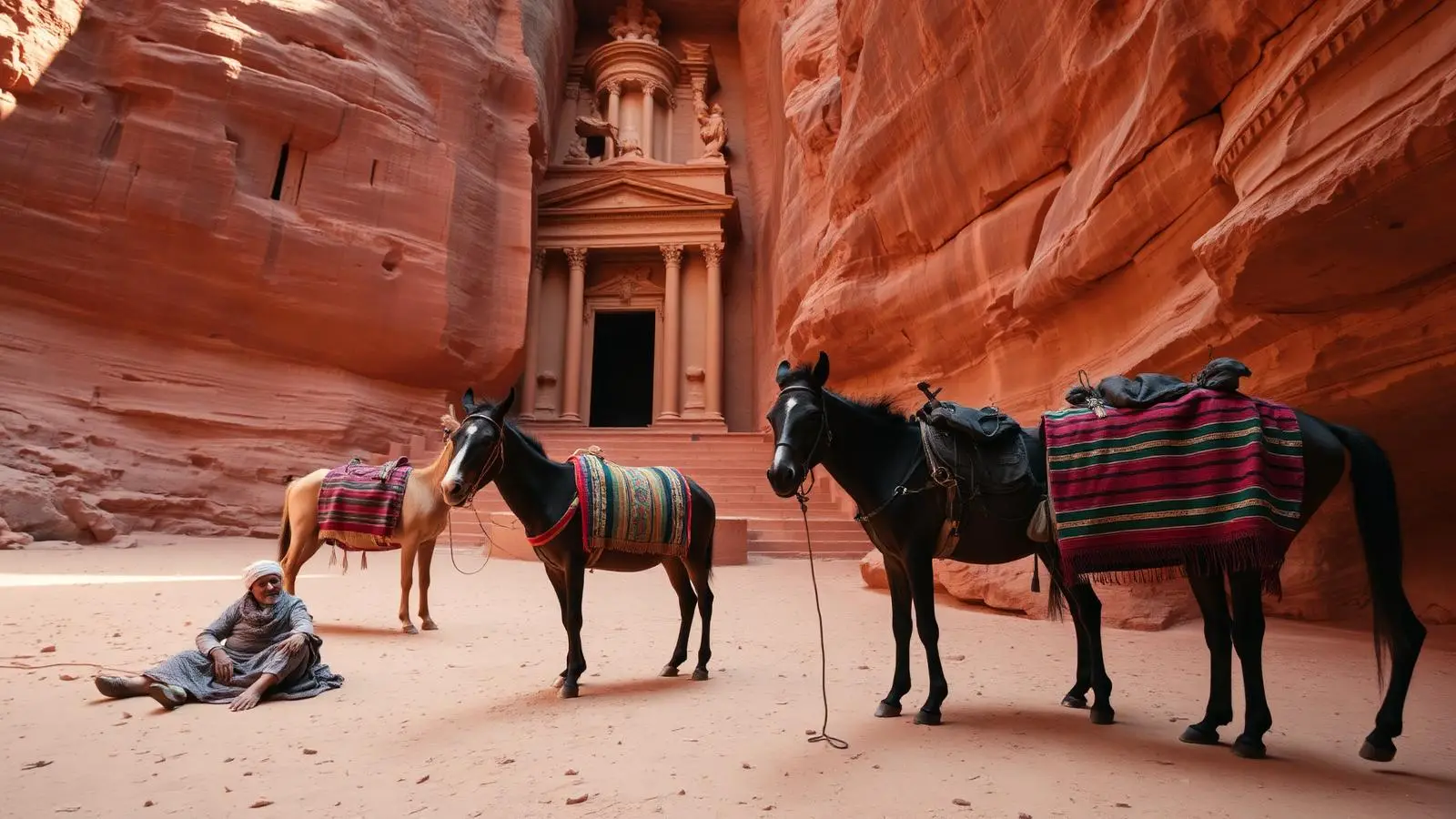
You will be offered a donkey at the foot of the stair for about 20–25 JOD one way. Some animals are well cared for; others are visibly overworked. If you choose to ride, look at the animal first and refuse any that is thin, lame or has sores. Agree the price before you get on. Do not ride down: the descent is where accidents happen, and it is hardest on the animal. Welfare concerns can be reported at the visitor centre.
Is it for you?
If you can climb several flights of stairs without stopping and are happy walking for most of a day, yes. If you have knee problems, the descent will be the hard part — consider walking poles. For gentler options, the route planner compares all five Petra trails by fitness, including the Al-Khubtha climb to the Treasury viewpoint.
Common questions
- How many steps are there to the Petra Monastery?
- About 800 rock-cut steps from the valley floor up to Ad Deir.
- How long does the Monastery hike take?
- Allow 6–7 hours for the full 13 km return from the gate, including the Siq, the Treasury and the valley walk before the stair.
- Is the Monastery hike hard?
- It is strenuous: a long, steep, uneven rock stair with little shade. The descent is harder on knees than the climb. It is manageable for most reasonably fit adults who start early and carry enough water.
- Should I take a donkey up to the Monastery?
- Donkeys cost about 20–25 JOD one way. Welfare varies: refuse any animal that looks thin, lame or sore, and never ride one down — walking is safer for you and kinder to the animal.
Turn this into a day-by-day plan
Five questions — dates, group, budget, length and fitness — and the Trip wizard builds your Petra itinerary with transport, hotels and costs.
Open the Trip wizard